Ready to make an impact in your community?
The most successful and beloved sports and recreation destinations aren’t just venues that host tournaments. Today, they’re modern, hybrid facilities that serve two purposes: creating spaces that generate tourism and, at the same time, vibrant year-round assets that bring residents together.
Across the country, forward-thinking cities are reimagining how their parks, fields, and recreation centers can serve both residents and visitors. The goal is simple yet powerful: build places that feel like home to locals but have the scale, amenities, and experience to attract regional and national tournaments and events.
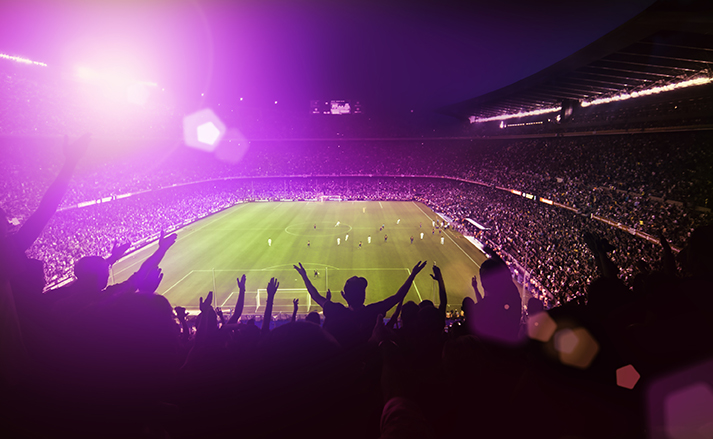
Designing for Both Tournaments and the Community
Balancing community access with visitor appeal starts with intentional design. Fields and venues must meet the standards of competitive play, while the surrounding environment invites everyday use. That means incorporating open green spaces, walking trails, plazas, and playgrounds alongside tournament-ready facilities.
Modern complexes are blending professional-level experiences — replica fields, elevated fan amenities, and event plazas — with accessible features like fitness centers, family-friendly zones, and community gathering spaces. When done right, these venues become both economic engines and quality-of-life anchors.
Flexibility is key. A well-designed facility can go from a packed tournament site on Saturday to a peaceful community park on Sunday, serving both audiences without compromising either experience.
A Real-world Example
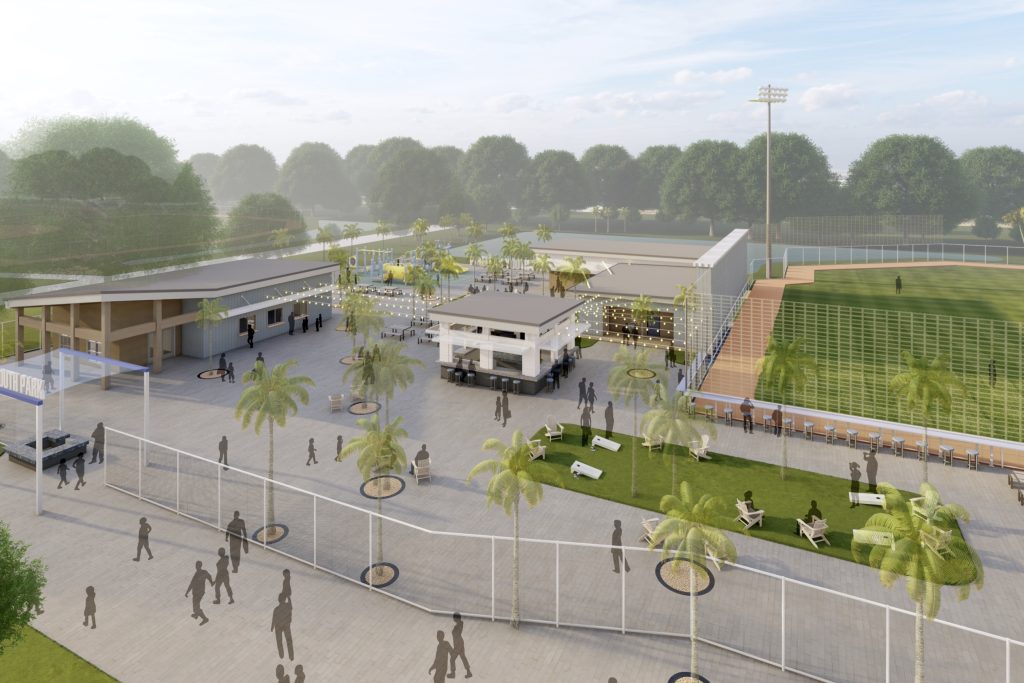
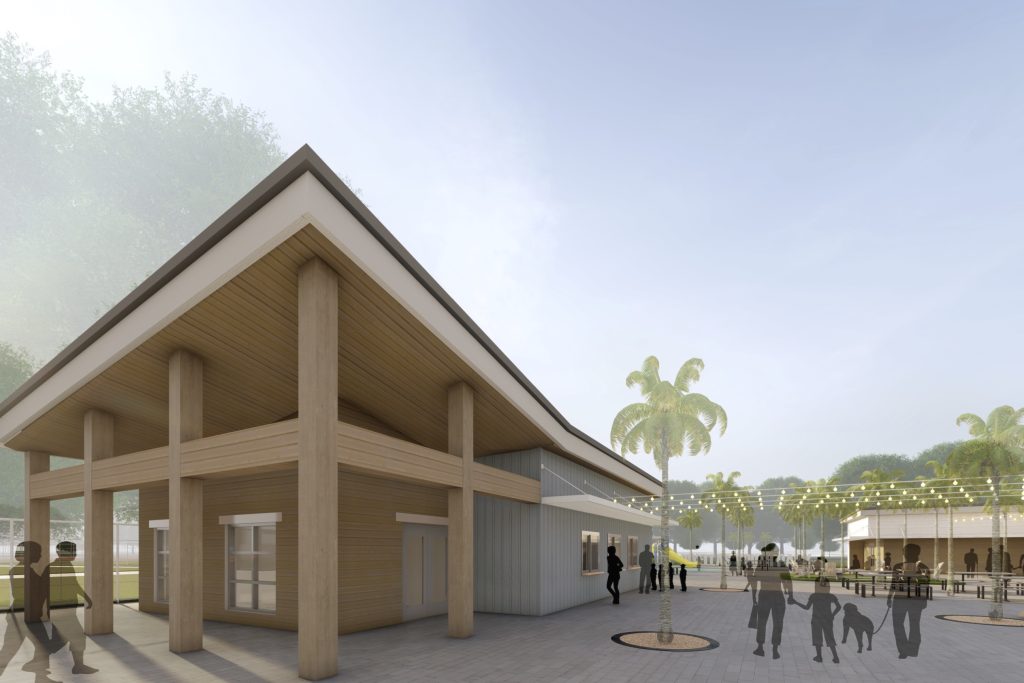
A perfect example is Sprowls Horizon Sports Park in Pinellas Park, Florida. This $26.5 million community-funded project combines sports tourism, local recreation, and community activation. Intentionally designed to serve both regional sports tourism and area residents.
“This park isn’t just for tournaments — it’s a park for everyone. Families can spend Saturday here, whether they’re playing or not,” described Sprowls Horizon Sports Park OSPORTS Senior VP and Director Thom Chuparkoff.
From spring-training-themed fields to a central plaza for year-round events, the design philosophy was about community, pride, and creating a space that feels uniquely “homegrown.” Chuparkoff added, “It’s about physical excellence, inclusivity, and growth. We’re setting a new standard for training and recreation that blends sports tourism with community life.”

Collaboration from Day One
Multipurpose facilities succeed when everyone is involved, meaning developers, operators, architects, engineers, and city leaders must begin collaborating from day one to build spaces that last.
Accountability and buy-in from everyone at the table, along with early alignment, help teams anticipate challenges, set shared goals, and design for long-term success. Getting that operational input during design is especially critical as it guarantees every element — from circulation to guest experience — is built for both performance and longevity. Some important considerations include:
- Traffic flow: Plan for seamless movement of vehicles, pedestrians, and maintenance access.
- Storage and logistics: Ensure ample, accessible space for equipment and event turnover.
- Signage and wayfinding: Design intuitive systems that enhance guest comfort and safety.
- Guest services: Incorporate thoughtful amenities that elevate the overall experience.
When planners think beyond opening day and design for year ten, they create facilities that run efficiently, age gracefully, and remain valuable community assets for decades to come.
Balancing Community Pride and Economic Growth
Dual-purpose design creates measurable value far beyond the playing field. Tournament-driven tourism generates hotel stays, dining revenue, and retail activity, while community programs, memberships, and local events sustain daily engagement.
Equally important is the sense of pride these projects inspire. Residents see their city investing in something that benefits everyone — whether through youth sports, public recreation, or new business opportunities. When people can use and enjoy a venue year-round, it stops being a facility and becomes a shared community landmark.
The result is a win-win scenario: visitors fuel the local economy, while residents gain an inclusive space that enhances their daily lives.
Designing for Lasting Impact
Sports and recreation development is evolving from single-purpose fields to multi-dimensional destinations. The future belongs to facilities that serve both hometown crowds and traveling teams.
By combining innovative design, early collaboration, and operational foresight, communities can achieve the perfect balance between accessibility and attraction. These are the places that not only host great games, but they also build connection, pride, and prosperity that last for generations.
Takeaway
When thinking about dual-purpose design, don’t look at it as a passing trend or a fad. Think of it as a strategy that can lead to long-term success. When communities invest in facilities that serve both residents and visitors, they’re building more than places to play; they’re creating lasting assets that drive economic impact, strengthen local pride, and keep delivering value long after the final whistle.
And if you have any questions or need help, we’re always here. Feel free to contact us or call us at 727-474-3845. The Sports Facilities Companies has guided projects in over 4,000 communities nationwide and has overseen $15+ billion in developed projects.