





By: Ally Azzarelli
You have a vision: a multi-sport complex that draws regional tournaments, a recreation center that anchors your downtown, and an aquatic facility your community has wanted for a decade. The concept is strong. The political will is there. Now what?
For most communities and developers, the next step is a sports facility feasibility study, and skipping it is one of the most expensive mistakes a project can make.
Why Feasibility Studies and What's at Stake?
Sports facilities are significant public or private investments, often in the $10 million to $100 million range or beyond. At that scale, building on assumptions rather than data is risky.
A feasibility study answers the foundational question every stakeholder eventually asks: Is this project financially and operationally viable? It replaces guesswork with evidence and opinion with analysis. Done right, it either validates your concept or tells you what needs to change before you commit real resources.
“Right-sizing the facility to the market opportunity is everything,” said Dan Morton, vice president of pre-development services at The Sports Facilities Companies. “Communities have different definitions of success … Maybe it’s operating income, maybe it’s community service, maybe it’s sports tourism, but you can’t achieve any of those without first understanding what the market can support.”
What a Financial Feasibility Study Actually Covers
A financial feasibility study is a detailed analysis of your project’s potential costs and revenues. Expect it to cover:
Revenue projections: Membership, event and tournament bookings, concessions, rentals, sponsorships, and ancillary programming income, modeled conservatively, realistically, and optimistically.
Operating expense modeling: Staffing, utilities, maintenance, insurance, and debt service. This is where projects most often underestimate the actual cost of running a venue day-to-day.
Capital cost estimates: Construction, FF&E (furniture, fixtures, and equipment), and start-up costs, including soft costs that get overlooked in early planning.
Financial outlook: Typically, a 5-year cash flow model and a 20-year financial projection, including EBITDA and net income scenarios, is what lenders and council members want to see.
Market Analysis vs. Financial Study: Know the Difference
These two deliverables are related, but not the same, however, a strong advisory process includes both.
A market feasibility report (or market opportunity report) answers the demand question: Is there enough population, participation, and competitive whitespace to support this facility? A market opportunity report analyzes demographics, existing competition, industry benchmarks, and participation trends.
A financial feasibility study takes that market picture and translates it into dollars, answering: Given what this market can support, what will this facility earn, and what will it cost to operate?
Together, they give you a complete picture. A financial study built without solid market data is only as reliable as its assumptions.
The market analysis also tells you how to differentiate. “In most towns, there’s already a YMCA, a parks and rec facility, or a fitness club,” Morton noted in a recent Community Playmaker article. “You’ll always share some overlap — basketball courts are basketball courts — but your programming, design, and amenities can be differentiated.” Knowing what the competition already offers helps you identify the gaps a new facility can fill.
When to Commission a Study in Your Project Timeline
The earlier, the better. Many communities make the mistake of commissioning a feasibility study after they’ve already committed to a site or a scope. At that point, the study becomes a validation exercise rather than a planning tool. A study done early, when the concept is still flexible, gives you the ability to act on what you learn.
How Feasibility Studies Have Shaped Real Projects
The Sports Facilities Companies has completed 100s financial feasibility studies for communities nationwide, and the data behind those studies comes from operating more than over 100 facilities in markets of every size.
That operational experience matters. SFC’s projections aren’t built on industry averages pulled from secondary research; they’re grounded in what real facilities actually earn and spend in comparable markets. The difference between a study built on real-world operational data and one built on benchmarks alone can be millions of dollars in projected revenue, and the gap between a project that gets funded and one that doesn’t.
Morton has seen projects move into design or construction based on assumptions that later fell apart under scrutiny, groups that spent hundreds of thousands on design documents, only to learn they were overbuilt or off-target for their market. The result: paying twice. Once for the plan that missed, and again to fix it.
Ready to Validate Your Vision?
If you’re serious about moving a sports facility project forward, a feasibility study is the foundation and key to protecting your investment, strengthening your funding case, and giving every stakeholder the confidence to get started.
We’re here to help guide you through the process from initial concept to a report that’s ready for city council, lenders, or investors — contact the SFC advisory team today.
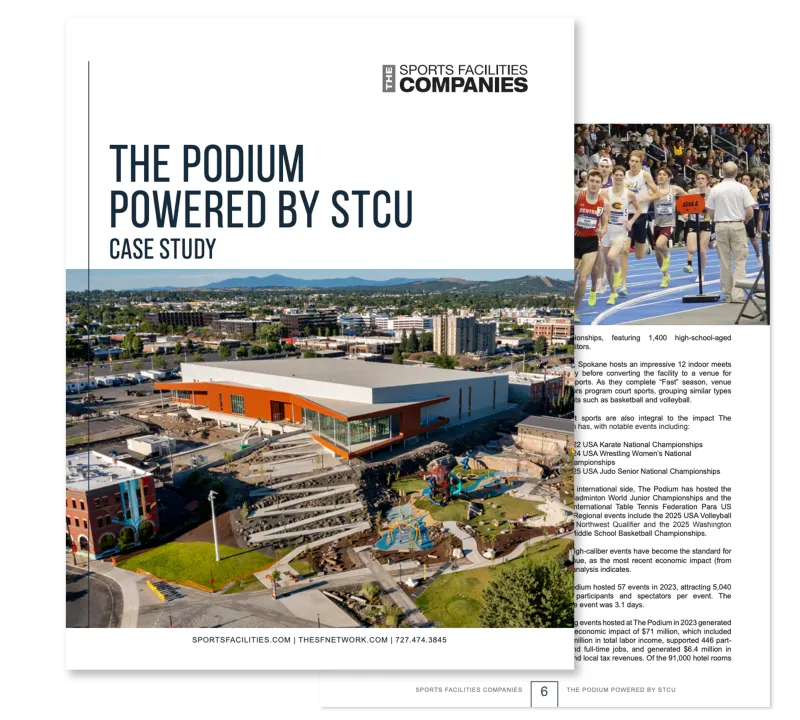
Download
The Podium Case Study