




By Ally Azzarelli
Here’s a truth every facility leader needs to hear: if a guest can’t find the bathroom, the concession stand, or their child’s court within sixty seconds, it becomes a leadership problem. Unfortunately, many operators treat wayfinding as an afterthought.
Oftentimes, facility leaders pour millions into turf, courts, and lighting, then hand wayfinding to whoever has budget left over. It’s a common mistake. Guests form an opinion about your facility before they watch a game, in the parking lot, the lobby, and at every intersection where they must guess which way to turn. Get it right, and you build trust before the whistle blows. Get it wrong, and it can turn into an uphill battle.
When it comes to wayfinding, here’s what works.
Wayfinding Starts Before the Front Door
Your guest’s journey begins the moment they exit the highway. If they can’t find the entrance from the road, or if the path from the parking lot to your lobby isn’t obvious, you’ve already lost ground. Elizabethtown Sports Park in Kentucky nailed this with a clear archway and signage that tells guests exactly where they are before they even step inside.
SFC Project Manager Dylan Lowdermilk puts it plainly: “The true test of a venue’s success lies in the guest experience; from the moment visitors arrive to the time they leave … A facility’s entrances and exits really set the tone for the entire experience,” he adds. “Poorly designed entryways can lead to congestion, safety risks, and frustrated guests.”
Walk your site plan as a first-time visitor. Identify every point where someone might hesitate or head the wrong way. Skip this exercise, and you’re guessing instead of planning.
Signage Alone Won’t Cut It
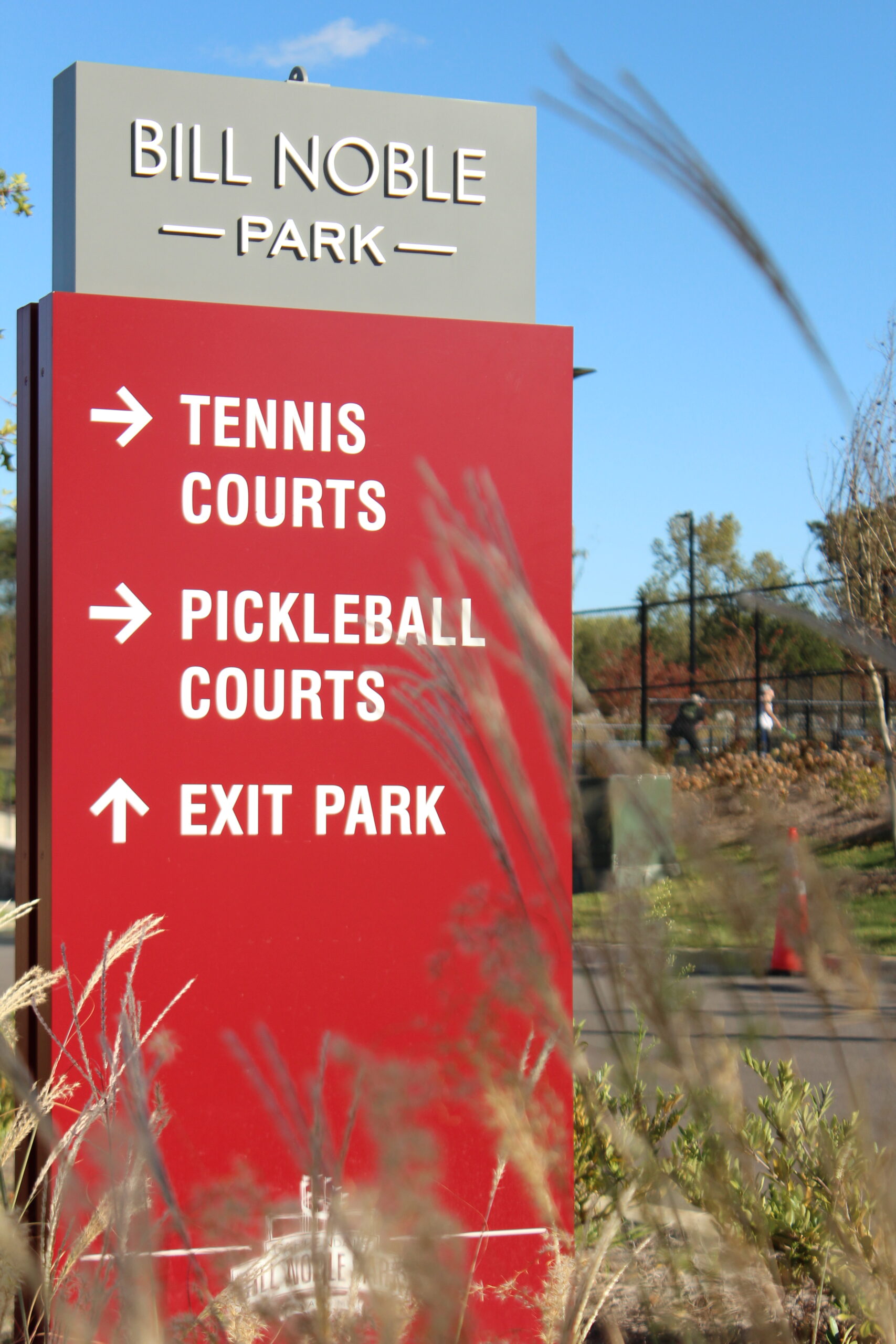
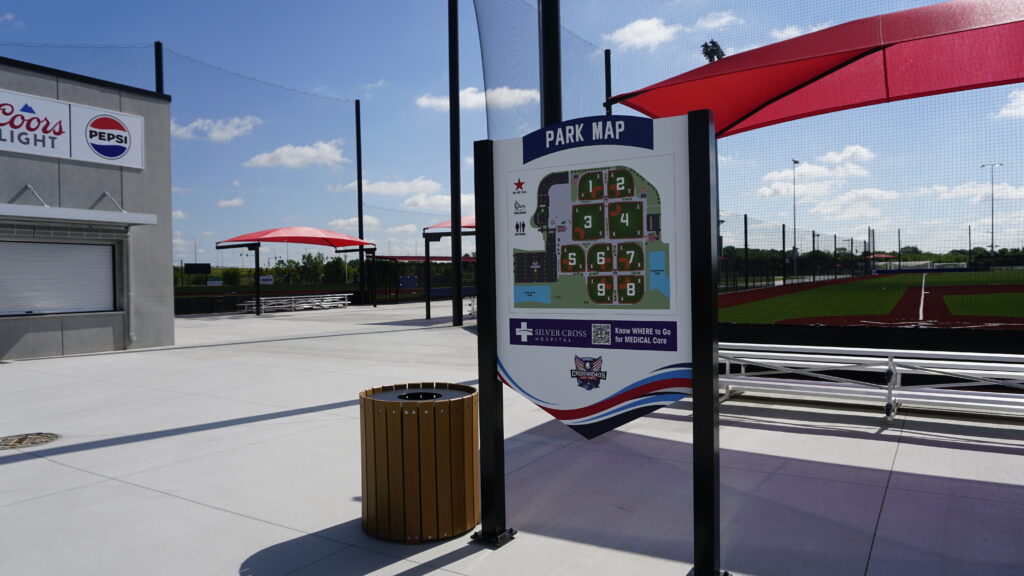
A wall of arrows and directional signs can make the space feel cluttered and confusing. Effective wayfinding answers the exact question a guest is asking. A parent looking for Court 4 doesn’t need a map of the entire complex. They need a clear, immediate answer.
That kind of precision happens when a facility treats wayfinding as a mapped system, built around real guest behavior. Jim Arnold, SFC Partner and National Director of Business Development, has seen this decide who wins the business: “These types of decisions and understanding of how spaces work, separating the top venues from others, are the reason why event rights holders choose one venue versus another.”
Recent SFC-led design conversations with veteran facility planners keep returning to the fundamentals: right-sized parking, designated pedestrian crossings, and clear wayfinding. Skip those basics, and the cost is higher guest frustration and lost visits.
Map the Entire Guest Journey
It’s best not to design wayfinding around the building layout instead of the guest experience. Those aren’t the same thing. Map every stop your guest makes: parking, entry, check-in, restrooms, concessions, and their court, then build signage around that sequence.
Every hesitation is a moment when a guest disengages from spending, whether that’s a concession purchase, a retail impulse buy, or the decision to book a return visit. A well-mapped guest journey moves people confidently toward the areas of your facility that generate revenue, rather than leaving them stalled in a hallway, staring at a directory.
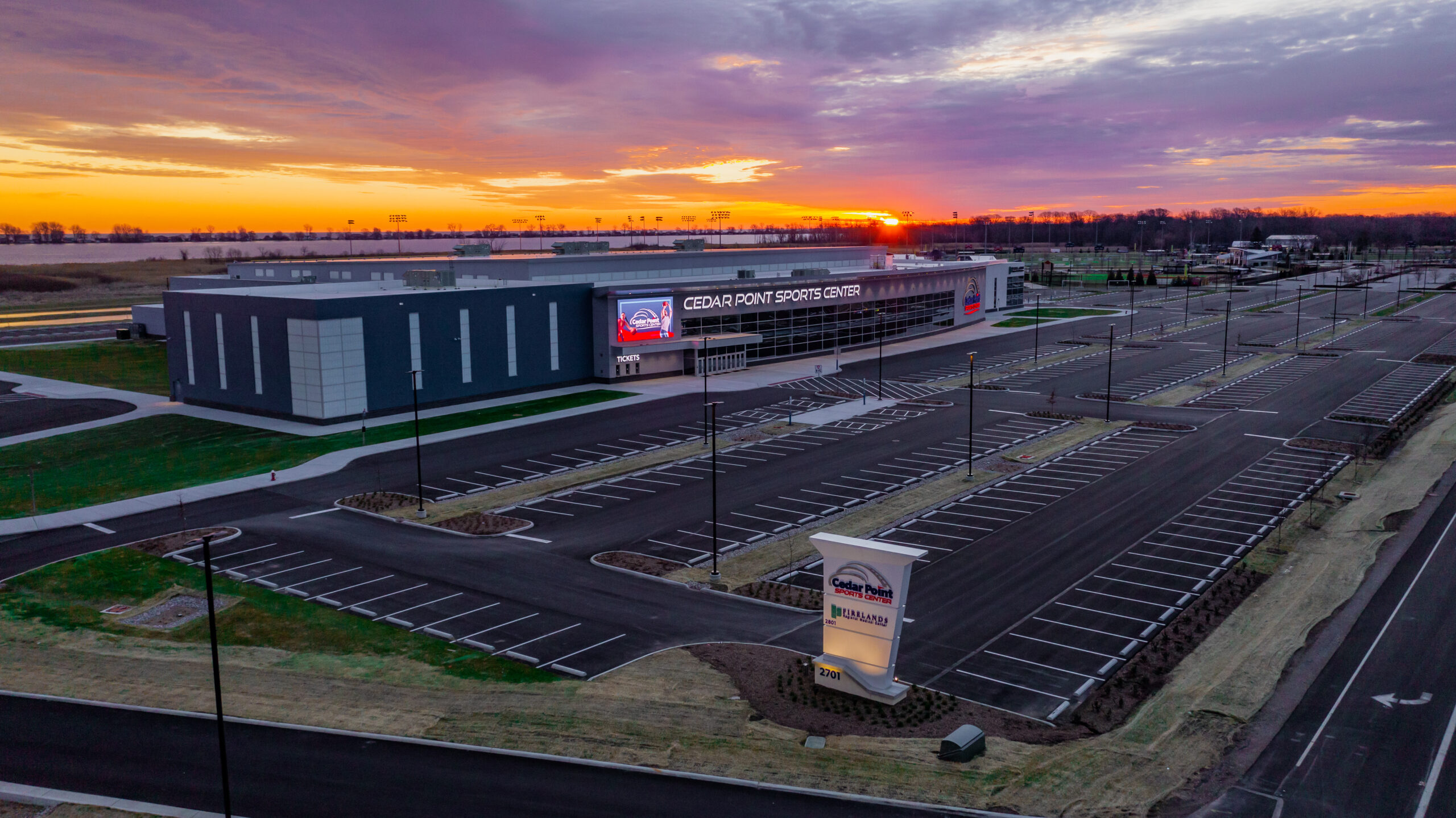
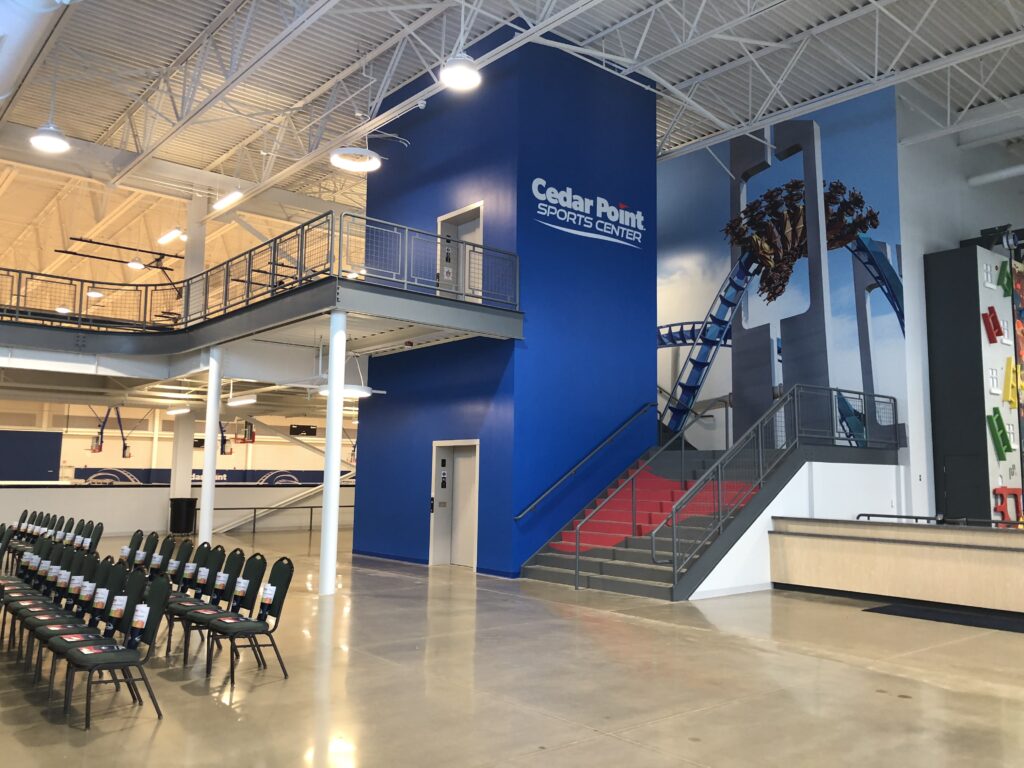
At Cedar Point Sports Center, guests navigate 145,000 square feet of sports and entertainment space using a digital wayfinding system with QR code kiosks that scan to pinpoint their exact location and provide turn-by-turn directions. The system was built around the actual guest path and serves as a sponsorship activation platform, turning every kiosk touchpoint into a revenue opportunity rather than a cost center.
Technology Amplifies a Good System
Indoor wayfinding technology, whether BLE beacons, Wi-Fi triangulation, or a mobile app, can guide guests to their seats, indicate concession line lengths, and adjust on the fly when your layout changes. This technology is valuable in multiuse venues that host a basketball tournament one week and a trade show the next. Done well, it turns a static building into a responsive one.
But make no mistake, an app doesn’t solve everything. Guests resist downloading a new app for a one-time visit, and any Wi-Fi-dependent system is only as reliable as your infrastructure. A network designed for point-of-sale traffic will buckle under hundreds of guests pulling up maps on a tournament weekend. Factor that investment into your program plan before construction starts. Retrofitting later is expensive and shows.
Brand Every Sign You Post
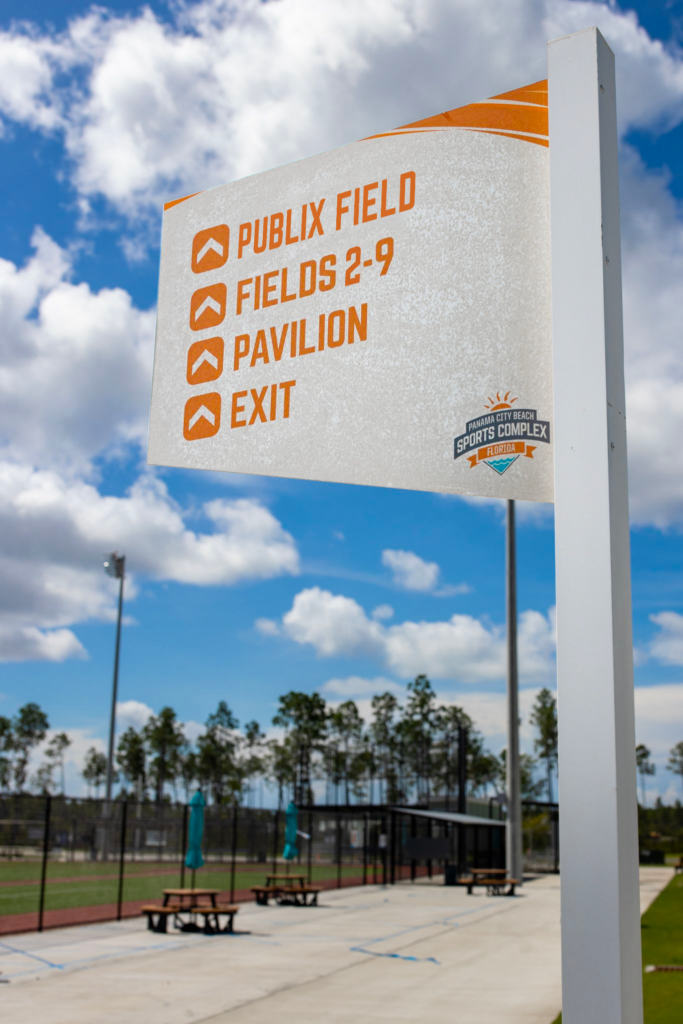
Wayfinding is one of the most underused branding tools in your facility. Every directional sign is real estate, so make the most of it. Integrate the facility’s colors, logo, and local identity rather than settling for generic signage that could belong to any venue in the country. Done well, your signage reinforces that guests are in a specific, memorable place.
“Placemaking is part of branding,” said The Sports Facilities Companies’ Art Director Tristan Makaroff. “Your brand is not only your logo but also your visual and operational identity. It’s how you look, how you sound, and how it feels to experience your facility.”
Skip this step, and you’re leaving value on the table for competitors to take.
Design for Your Busiest Day
Your sports facility’s wayfinding system gets tested hardest on your biggest tournament day. Design for that peak moment: restroom counts and signage built for event-day crowds, single points of entry that don’t create bottlenecks, and clear paths that hold up at full capacity.
Mike Mays, SFC’s Senior Project Manager of Development Services, made this point during a recent SFC webinar on outdoor multiuse complexes: he pointed to the fundamentals that decide who wins — right-sized parking, clear wayfinding, designated pedestrian crossings, and restroom counts built for peak event days rather than code minimums.
If your wayfinding only works when the building is half empty, it doesn’t work. Plan for the day everything is on the line. That’s the day your reputation is made or broken.
Sports Facility Wayfinding FAQs
What is wayfinding in a sports facility?
Wayfinding is the complete system that guides a guest from the parking lot to their seat or court without hesitation. It includes signage, sightlines, branding, and technology, not just directional signs.
Why does wayfinding affect guest experience and revenue?
Confused guests arrive stressed, spend less time at concessions and retail, and leave reviews that focus on frustration rather than the game. Clear wayfinding builds trust before the first whistle and keeps guests moving toward revenue-generating areas.
What is the difference between signage and a true wayfinding system?
Signage is one tool inside a wayfinding system. The system maps the entire guest journey, parking, entry, restrooms, concessions, and the specific court or field, then layers signage, branding, and technology on top of that mapped path.
When should wayfinding be planned during facility design?
Before construction starts. Wayfinding decisions affect network infrastructure, sightlines, signage placement, and entrance design, all of which are far cheaper to build in during planning than to retrofit once the building is finished and guests are already navigating it.
The Bottom Line
Wayfinding is a system that deserves the same rigor you bring to your programming, budgeting, and operations. Facilities that get this right build guest loyalty before a single game is played. Those that don’t will spend years wondering why reviews cite confusion rather than the experience they worked hard to create.
Avoid treating wayfinding as an afterthought; instead, build it into your design conversations from day one, and hold your team accountable the same way you would any other part of your facility’s performance.
If planning a new venue or evaluating your current guest flow, SFC’s venue planning and design consulting team builds wayfinding into the process from the ground up. Reach out, and together we’ll ensure your wayfinding helps elevate the guest experience.
Download
Cedar Point Sports Center Case Study