




By Ally Azzarelli
The economic impact of sports tourism extends beyond a headline number. It gives city leaders a fuller view of how a sports facility attracts visitors, generates local spending, supports jobs, and advances community goals.
Strong communities pair attendance data with a baseline, a clear definition of new spending, ongoing performance tracking, and public priorities.
What Is Sports Tourism Economic Impact?
Sports tourism economic impact is the economic activity generated when non-local visitors travel to a community for tournaments, competitions, showcases, concerts, or other facility-based events.
A credible analysis typically considers:
- Non-local visitor days
- Hotel room nights generated by events
- Average daily spending on lodging, dining, entertainment, retail, and transportation
That spending can be translated into projected or actual tax revenue. Sports Facilities Companies’ (SFC) Economic Impact Report uses this framework and focuses on visitors traveling for roughly 60 minutes or more, as their spending is more likely to represent new demand.
Measure Incremental Spending Alongside Attendance
Attendance provides an important measure of participation. To understand economic impact, city leaders can pair it with a second question: How much spending did the event or facility bring into the market?
That means viewing local participation alongside out-of-market visitation. A local resident contributes to participation, while a family that drives three hours, books a hotel room, purchases meals, and visits attractions adds a distinct layer of visitor spending.
Together, these perspectives create the foundation of a defensible analysis.
Track The Metrics That Matter
A practical measurement plan should include data on tourism, facilities, and the community. At a minimum, track:
- Non-local visitors and visitor days
- Hotel room nights tied to events
- Lodging, restaurant, retail, and entertainment spending
- Local and state tax revenue
- Event number, type, length, seasonality, and repeat bookings
- Jobs connected to construction, operations, hospitality, and retail
- Facility revenue, operating expenses, and public subsidy
- Resident participation and community-use hours
Each metric has a role. Room nights indicate tourism performance, tax revenue indicates public-sector benefit, operating results indicate facility sustainability, and resident participation indicates community value.
Define each measure so city councils can see whether a figure represents direct spending, broader economic activity, tax revenue, or facility-level revenue.
Compare Forecasts With Actual Results
Economic impact forecasts provide an important starting point before construction. Once a venue opens, leaders can compare projected performance with results on a regular schedule.
Review event volume, visitor origin, room nights, spending patterns, tax collections, and operating performance. When results vary from the forecast, examine the contributing factors: event volume, event mix, hotel inventory, and local business participation.
This is where measurement becomes management. The answer may be improved event recruitment, stronger CVB coordination, revised programming, better marketing, or a more realistic operating model.
Use SFC Examples as Context
SFC’s managed-venue portfolio shows why context matters when comparing sports tourism results.
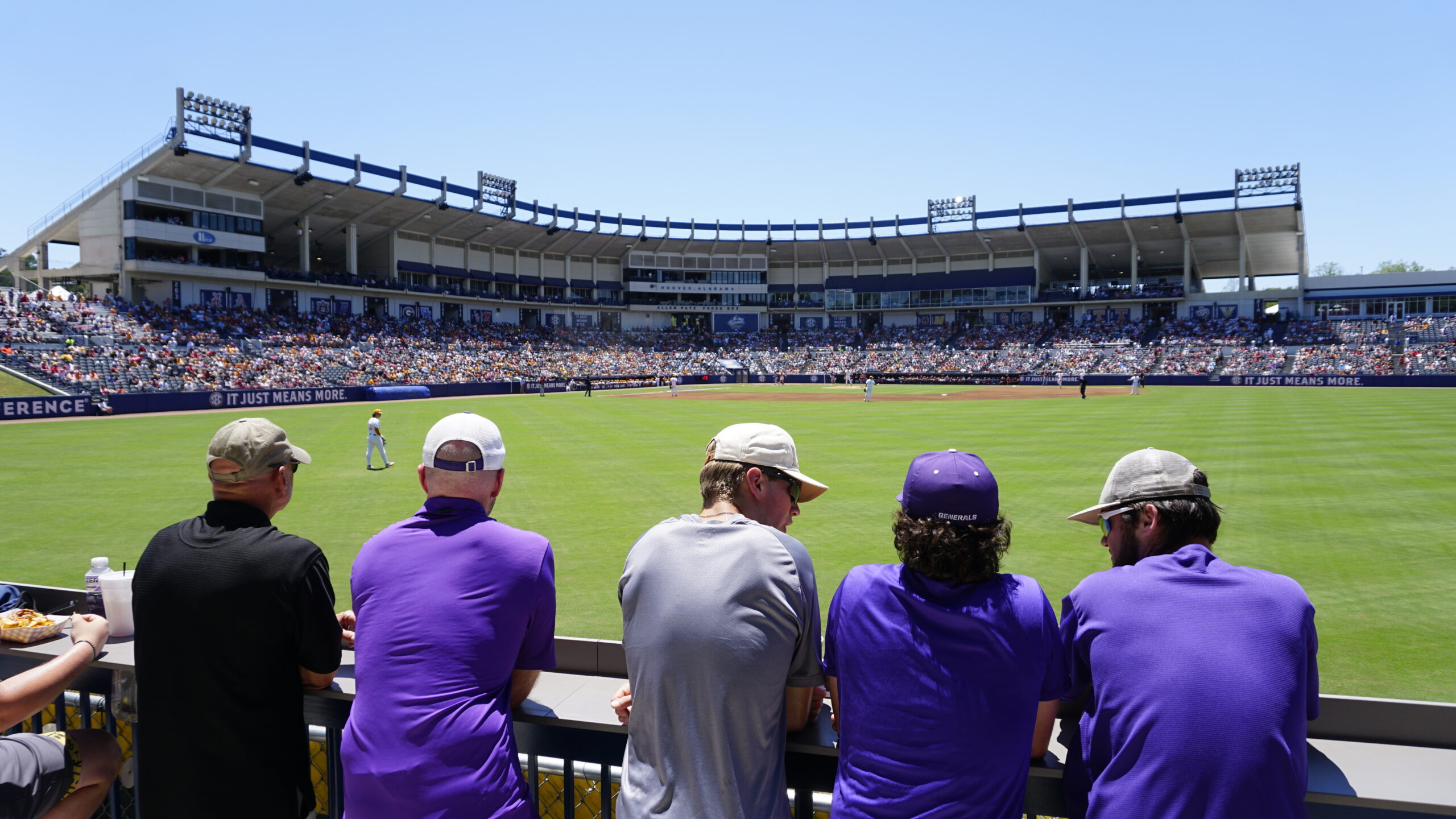
SFC reports that Sand Mountain Park and Amphitheater in Albertville, Alabama, generated $22 million in economic impact in 2024. SFC also reports that Hoover Met Complex in Hoover, Alabama, generated more than $101 million in economic impact in 2025.
Those figures illustrate the scale that well-programmed sports destinations can achieve. Each community has its own market size, venue scale, event mix, hotel capacity, operating model, and reporting period. Leaders can use these examples to frame better questions and develop projections tailored to their own market.
For additional context, read Economic Development Through Sports Facilities.
Connect Impact to Community Goals
Economic impact is one important part of a public facility’s value. Before choosing metrics, leaders should define the outcomes the project needs to support.
Is the goal to increase hotel occupancy, strengthen a downtown district, create jobs, expand recreation access, support youth retention, or attract private development? Each goal requires a different baseline and set of indicators.
A rural community with limited hotel inventory and a metropolitan suburb with extensive lodging, dining, and retail will each use different measures of success. The guiding question is, “What outcomes does this facility need to produce—and how will we know whether it is working?”
Build a Defensible Measurement Plan
City leaders considering a new venue or repositioning an existing one should establish measurement before making the investment. That process can include:
- A market opportunity report to assess demand, competition, participation, and market conditions
- A financial feasibility study to model realistic revenues and expenses
- An economic impact report to estimate non-local visitation, room nights, visitor spending, and tax implications
- A post-opening process that compares forecasts with actual performance
- Coordination among the city, facility operator, CVB, hotels, and local businesses
The goal is a clear, well-supported projection that elected officials, residents, funders, and partners can understand and trust.
Turn Economic Impact Into A Leadership Tool
Sports tourism can bring meaningful economic activity to a community when demand, facility design, event recruitment, hotel capacity, operations, partnerships, and measurement work together.
SFC helps municipalities and developers evaluate those factors through its advisory services. If your community is considering a sports facility or seeking better performance from an existing venue, connect with SFC to discuss the goals, benchmarks, and evidence your project needs.
Frequently Asked Questions
How Is Sports Tourism Economic Impact Calculated?
It is generally calculated using non-local visitor days, hotel room nights, and average visitor spending, then translating that activity into direct spending and potential tax revenue. A sound methodology explains its assumptions and separates local activity from new visitor spending.
What Is the Most Important Sports Tourism Metric?
There is no single metric for every community. Consider visitor days, room nights, spending, tax revenue, event volume, repeat bookings, and operating performance together. The best measures align with the city’s stated goals.
Is Economic Impact the Same as Return on Investment?
Economic impact and return on investment answer different questions. Economic impact measures activity generated in the broader community, while return on investment compares benefits with the cost of the public or private investment. Both perspectives help leaders evaluate a project.
Can an Existing Sports Facility Measure Economic Impact?
Yes. Existing facilities can use event records, visitor-origin data, hotel information, spending research, tax data, and operating reports to estimate actual impact and refine future planning.

Download
How Third-Party Professional Management Delivers Results