




By Ali Yenchick
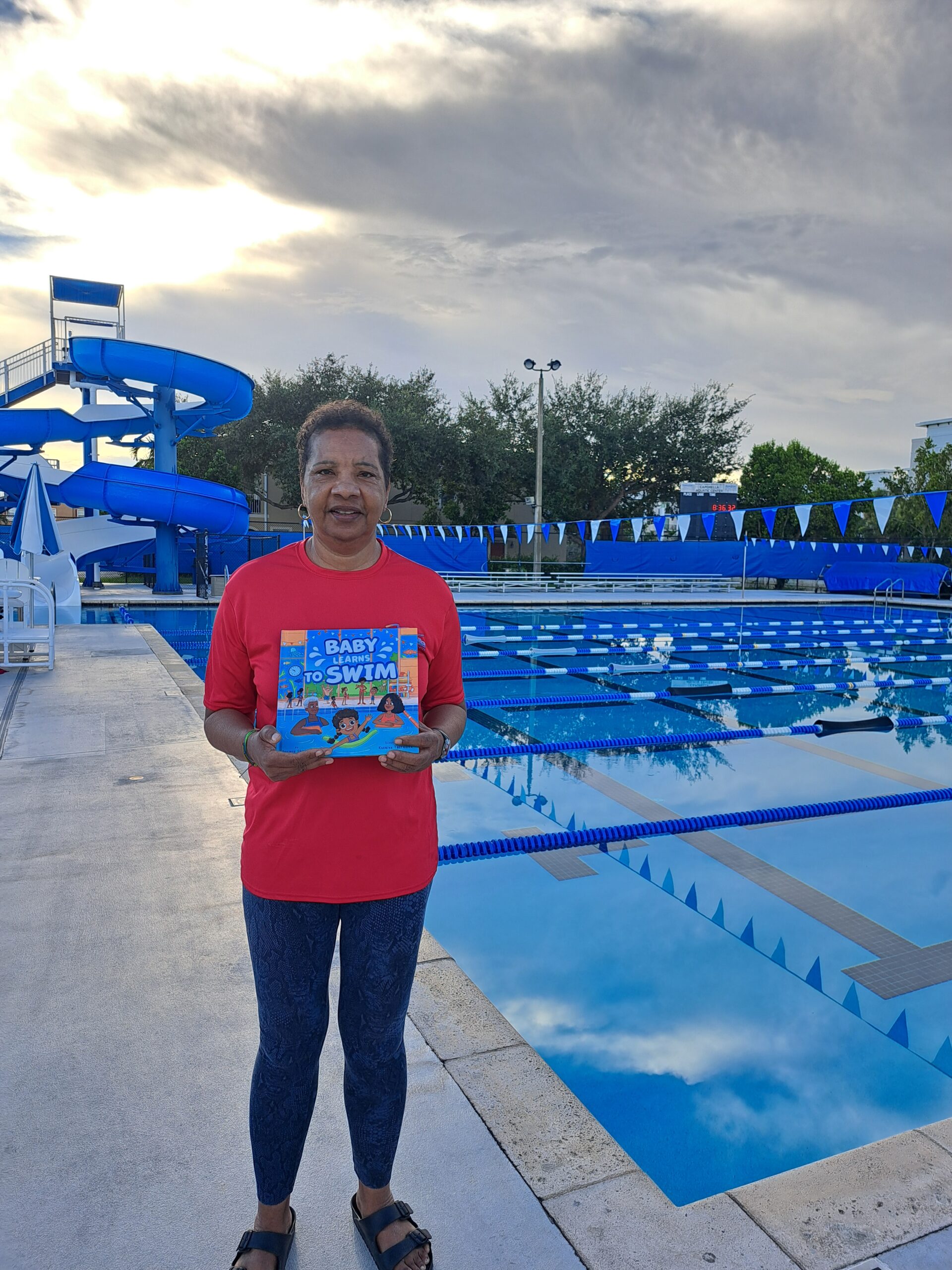
Every child deserves to know how to swim—but for too many families, that life-saving skill is never passed from one generation to the next. That’s what Desiree “Des” Shirley is working to change through her first children’s book, Baby Learns to Swim.
After years of helping people feel more comfortable in and around the water, the Caporella Aquatic Center general manager is using this story to make water safety feel personal, positive, and accessible.
A Generational Story With a Lifesaving Lesson
Five years in the making, Baby Learns to Swim follows a young girl who receives an invitation to a pool party. Excited to attend but unable to swim, she asks her mother for help—only to learn that her mother does not know how to swim either. Her grandmother does not know how to swim, either.
The three generations ultimately come together to learn how to swim as a family. For Des, that storyline reflects a reality she has seen throughout her career: When adults have not had access to swimming lessons or do not view swimming as essential, their children may miss out on those opportunities, too.
By telling the story through a child’s eyes, the book gives parents, caregivers, and children an approachable way to begin an important conversation.
Making Water Safety Personal and Practical
Des was inspired to write the book because water is part of everyday life, especially in Florida. Families regularly encounter pools, lakes, beaches, and other bodies of water, yet many children and adults are not prepared to navigate them safely.
She believes early education can help prevent drownings, but she does not want water-safety conversations to be driven by fear. Learning to swim is a lifesaving skill, but it can also build confidence, create connection, and open the door to countless moments of joy.
At Caporella Aquatic Center, Des sees that joy firsthand. Children’s excitement as they become more comfortable in the pool reinforces why the work matters—and why learning should feel empowering rather than intimidating.
Challenging Misconceptions and Expanding Representation
The book also addresses a misconception Des hopes to see disappear: the idea that black and brown children do not know how to swim.
Des found her passion for swimming at age three, but remembers being the only black child at the pool while growing up in a predominantly white community in Wisconsin. She noticed that no one around her looked like her and began to wonder why.
Over time, she came to understand that many families had never learned to swim themselves, and as a result, didn’t view swimming as a necessary life skill. That pattern can continue from one generation to the next.
Des wants Baby Learns to Swim to help break that cycle while showing children that aquatic spaces are for them. She also points to the growing visibility of black athletes in competitive swimming as an important reminder that skill, passion, and success in the water are not limited by race.
Connecting the Book to Community Programs
Des hopes the book can support the work already taking place at Caporella Aquatic Center and in local schools. One of her goals is to bring Baby Learns to Swim into elementary school curriculum, giving educators another age-appropriate tool for introducing water safety.
The center also participates in Swim Central, a program connected with elementary schools that reimburses the facility for teaching children to swim. The program provides two weeks of free lessons, creating an opportunity for families to give their children foundational instruction at no cost.
Still, Des says a surprising number of parents choose to opt out—again, because they didn’t learn to swim themselves and don’t yet see swimming as a life-saving skill. That is why education must reach entire families—not only children.
A story such as Baby Learns to Swim can help make that first step less intimidating. It gives parents a way to talk with their children, acknowledge what they may not know, and learn alongside them.
Building Safer, More Confident Communities
Since its publication, Baby Learns to Swim has received a positive response. Des hopes that response continues to grow as the book reaches more families, educators, and aquatic professionals.
Ultimately, her message is simple: It is never too early to teach children about water safety, and it is never too late for adults to learn, too.
By combining her experience as an aquatics leader with a story about family connection, Shirley is helping make swimming feel more accessible and more relevant. Her work reminds communities that safer water experiences begin with education—and that learning together can be one of the most meaningful ways to begin.
Baby Learns to Swim is available at Amazon, Target, and Barnes & Noble.

Download
West Monroe Case Study