





By: Ally Azzarelli
Sports and recreation venues are built with good intentions and plans to be busy, with full courts, waitlisted classes, and weekend events packed with families. However, even with state-of-the-art offerings, proven programming, and national support, many venues still struggle with awareness, attendance, and new sign-ups.
“Often, though the venues seem to be doing everything right, the people running them face a consistent set of behind-the-scenes marketing challenges,” explains Sports Facilities Companies Vice President of Venue Marketing, Jeff Philbin.
The Importance of Effective Marketing
“Sports facilities that outperform their projections typically treat marketing as a core operating function, not a nice-to-have,” adds Philbin.
When marketing is aligned to operations and revenue goals, it becomes a powerful driver of performance:
- Builds awareness for new programs and offerings
- Fills camps, leagues, lessons, and events
- Maximizes facility usage across peak and off-peak times
- Drives repeat visits, memberships, and higher spend per guest
The difference is not just doing more marketing — it’s doing it with purpose and structure.
Start With Clear Goals
Before launching any campaign, you’ll want to clearly define the business problem and desired outcome to define what success looks like. Without clear direction, marketing becomes reactive. Is the challenge low daytime court utilization, weak enrollment for swim lessons, or slow membership growth? Each requires a different message and a mix of tactics, suggests Philbin.
Consider using a simple structure to lock in the strategy:
- Identify the primary business challenge: What’s actually broken or underperforming?
- Set a primary objective: Registrations, memberships, rentals, or repeat visits?
- Decide on your target audience: Families, active adults, seniors, clubs, or schools?
- Define success metrics: Units sold, revenue generated, utilization rate, or retention?
Starting with a clear plan helps keep every marketing effort tied to an operational result, not just clicks or impressions.
Use Multi-Channel Tactics
“Once the goal is clear, venues can tap into a proven toolkit of tactics, with most successful campaigns combining several simultaneously,” he advises.
- Paid social: Highly targeted ads on platforms like Meta drive parents, athletes, and active adults to specific program or registration pages.
- Email and CRM: Segmented lists enable venues to speak differently to current members, lapsed participants, and first-time visitors, nudging each group toward their next best action.
- Website and SEO: Clear, mobile-friendly pages for programs such as swim lessons, pickleball leagues, or SilverSneakers® classes help venues capture local search traffic and convert interest into sign-ups.
- On-site signage: Front-desk posters, scoreboard messages, and digital displays turn high foot traffic into awareness for upcoming seasons, events, and camps.
- Partnerships: Schools, clubs, healthcare providers, employers, and tourism partners help extend a venue’s reach into the community and beyond.
The key is coordination for an omni-channel approach as each channel should support the others, not operate independently for maximum results.
Turn Visitors Into Regulars
“Winning the first visit is only half the equation. High-performing venues focus just as hard on what happens after someone walks through the doors,” says Philbin.
Typical retention and growth plays include:
- Welcome and follow-up sequences: Timely emails thanking guests for their visit and highlighting the next relevant program or membership option.
- Program pathways: Turning a child’s first camp into a progression of clinics, leagues, and tournaments or guiding a new member from open gym to small-group training and specialty classes.
- Member stories: Showcasing real families and participants on social media and in-venue builds social proof and fuels powerful word-of-mouth.
When these elements are in place, venues move from one-time transactions to long-term relationships.
Share Your Wins
It’s important to document and share your venue’s marketing success stories. By capturing the challenge, tactics, spend, and measurable results in a simple one-page format, venues can:
- Demonstrate clear ROI to all stakeholders
- Secure appropriate marketing investment
- Inspire other facilities facing similar challenges
“When marketing and operations align, the results speak for themselves; they form ‘markerations’— record-breaking economic impact in tournament destinations and full class rosters at community centers. For communities, that means more access to play, healthier residents, and stronger local economies. For venues, it means courts, classes, and calendars that stay consistently full,” shares Philbin.
The Bottom Line
Marketing is not just about awareness or promotion.
It’s about building a system that:
- Drives consistent demand
- Converts interest into revenue
- Creates repeat engagement
Facilities that embrace this approach don’t just fill time slots; they build sustainable, predictable performance.
How SFC Can Help
Sports Facilities Companies can help venues by offering in-house marketing services that can amplify these efforts through shared creative resources, tools, and PR support. Reach out to us online or call us at 727-474-3845 to discuss winning tactics for your venue today.
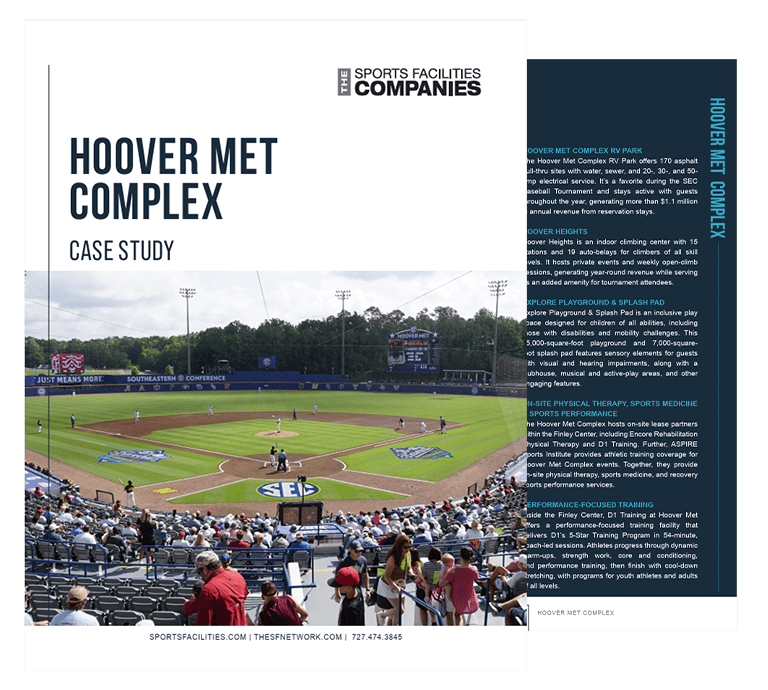
Download
Hoover Met Complex Case Study