




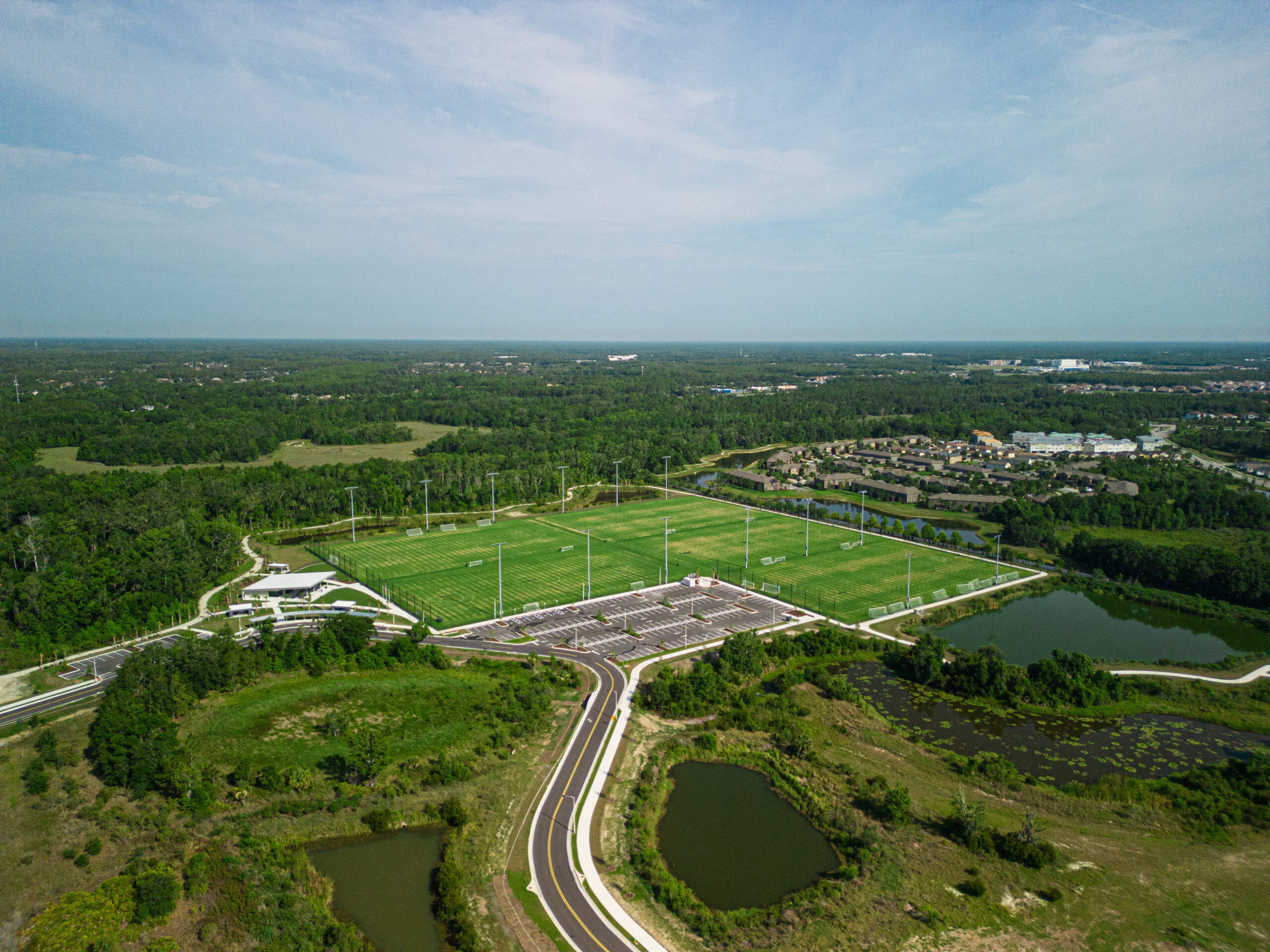
Above shows Wiregrass Ranch Sports Campus, one of our dual use sports facilities.
By: Ali Yenchick
Hurricane season runs from June 1 through November 30, and even in a below-normal year, NOAA forecasts 8 to 14 named storms, including up to six hurricanes. It only takes one to change a community overnight.
Across The SFNetwork, venues built for competition, events, and recreation have also served as staging grounds, shelters, recovery hubs, and places communities can turn when normal life is suddenly disrupted. And that is when these facilities truly matter.
What makes these venues so valuable in difficult times is not only their size, but their readiness. They are already staffed, maintained, operationally organized, and built to move large numbers of people safely — all qualities that matter when a community needs help fast.
Paradise Coast Sports Complex: A sports destination that became an emergency support center
When Hurricane Ian hit Southwest Florida in 2022, Paradise Coast Sports Complex (PCSC) shifted from its normal role as a sports and recreation destination into an active emergency support site. During the storm response, the complex was used as a staging area for FEMA, the Collier County Sheriff’s Office, Florida Fish & Wildlife, and associated recovery efforts.
Even while the broader complex was closed, The Cove Beer & Wine Bar remained open on its regular schedule, and the site offered charging stations and free Wi-Fi for guests. In practical terms, that meant residents had a place to recharge devices, reconnect, and access basic support during an unstable moment.
That kind of response matters because recovery is not only about large-scale logistics. It is also about small, immediate needs — a charged phone, an internet connection, a centralized place where public safety and recovery teams can operate. PCSC showed how a venue built for gathering can also serve people when gathering for entirely different reasons.
Wiregrass Ranch Sports Campus: Built with resilience in mind
Wiregrass Ranch Sports Campus offers one of the strongest examples of what dual-purpose design can look like when resilience is part of the plan from the beginning. The venue was engineered from the outset as a hurricane shelter and built to withstand winds up to 170 miles per hour.
That shelter function also strengthened the project financially. Pasco County’s emergency management department secured a $2 million FEMA Hazard Mitigation Grant Program award that covered roughly 75 percent of the facility’s hurricane-hardening costs, illustrating how emergency readiness can directly support long-term facility investment.
And, sure enough, the campus’s value became especially clear during Hurricane Milton in 2024, when Wiregrass served as both an emergency shelter and a triage hospital for the community. Because the venue is active, staffed, and maintained year-round, the team was able to transition quickly and effectively when the community needed it most.
Fort Bend Epicenter: readiness as a community responsibility
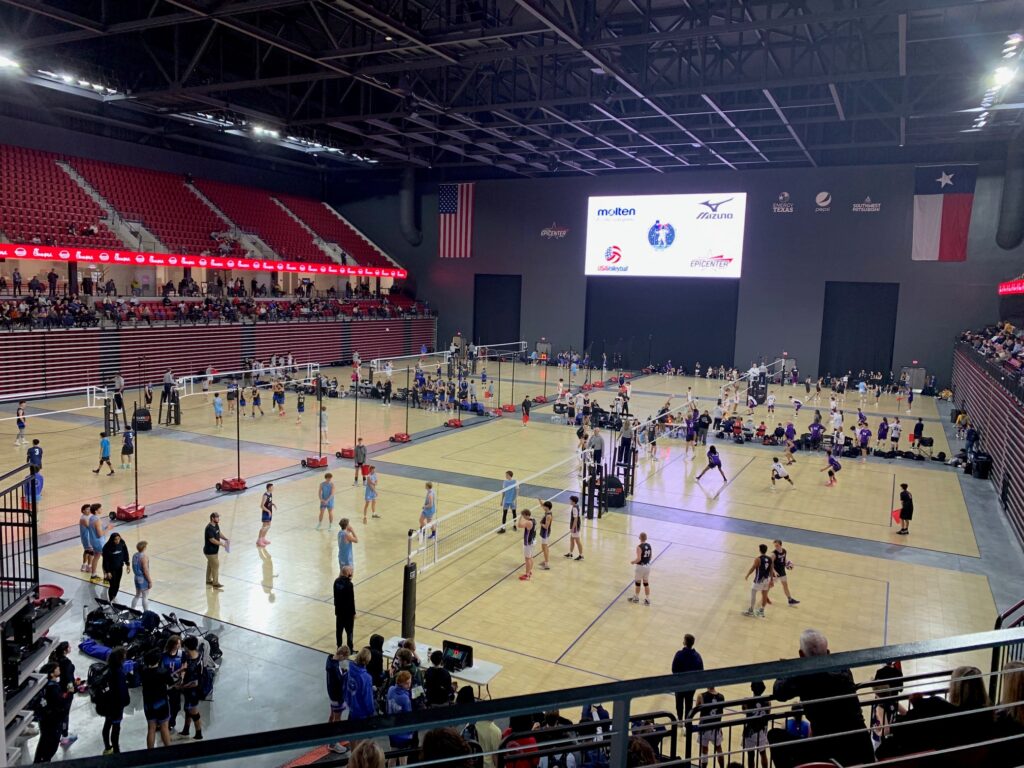
Fort Bend Epicenter demonstrates a different but equally important side of community service: preparedness. Internal hurricane procedures for the facility explicitly frame the venue’s emergency role in terms of mass care sheltering, including life-sustaining services such as water, food, basic sanitary needs, cooling and warming centers, family reunification, and bulk distribution of emergency relief items.
That language is significant because it shows a venue thinking beyond the event calendar. It reflects an operational mindset that understands a large public facility may need to pivot quickly from hosting guests to protecting them.
The same planning appears in the site’s severe weather procedures. In the event of tornado activity, guests from the RV park are directed to seek shelter inside the Epicenter building, specifically in the service hallways or locker rooms, and in the event of a hurricane, the RV lot is scheduled to close and clear 72 hours before landfall.
Facilities do not become trusted emergency assets by accident. They become trusted because teams have already thought through the details — where people go, how they are moved, who gets called, and what systems must stay functioning under pressure. Fort Bend Epicenter’s planning shows what that kind of responsibility looks like in practice.
Rocky Mount Event Center: stepping up when another venue could not
Rocky Mount Event Center (RMEC) offers a slightly different example of what community-minded facility leadership looks like in real time. When a fire disrupted operations at the Raleigh Convention Center, Rocky Mount stepped in as a regional partner to help protect displaced events and support organizers facing sudden uncertainty.
The facility did what strong community assets do: it adapted quickly, filled a gap, and helped keep momentum, revenue, and opportunity in North Carolina. It acted as a backup host while also sharing operational expertise, staffing support, equipment logistics, and layout solutions to help keep shows, meetings, and programs on track.
Not everything goes according to plan, and that response says a great deal about the role venues can play during difficult moments. It can also become part of the solution when disruption hits, giving event owners, partners, and communities assistance and peace-of-mind in a crisis situation.
More than venues
There is a tendency to think of sports and event venues only in terms of economic impact, tournaments, attendance, and programming. Those things matter, but stories like these are a reminder that the strongest facilities also deliver something that’s harder to measure: community resilience.
When designed and operated well, a facility can be both an economic engine and a place of support. It can drive tourism on a normal weekend and help power recovery in a hard season. It can host families for competition one month and serve those same families with shelter, safety, and relief the next.
That is what makes these facilities worth celebrating. They are not only places where communities play. They are places where communities show up for one another.
If your community is planning a new sports, recreation, or event venue — or looking to strengthen an existing one — contact SFC to learn how our advisory, development, and management services can support your goals.
Download
Hoover Met Complex Case Study