




By Ally Azzarelli
Cosmic Combat, a glow wrestling tournament at Cedar Point Sports Center in Sandusky, Ohio, on Oct. 31 and Nov. 1, 2026, aims to give families a weekend they won’t soon forget and a reason to come back.
The house lights go down, and neon and black light take over, with music and custom awards built around the theme. Saturday features individual wrestling, and Sunday features dual wrestling. Athletes who registered by Sept. 30 receive a glow-in-the-dark singlet.
Cosmic Combat is a first for the venue, though glow wrestling has run under other names in other markets. The concept came from Combat Life, the event owner formerly known as New Way Combat, which also ran the Rumble, the venue’s big summer wrestling event. “We had an open weekend. They had an idea, and we’re rolling with it,” said Jake Schwerer, senior marketing manager at Cedar Point Sports Center.
For municipalities planning a new sports facility or looking to get more from an existing one, that exchange is the lesson. A facility earns its value through the events and operating decisions that give people a reason to show up, and square footage is only the starting point.
What Makes a Glow Wrestling Event Valuable to a City?
A glow event gives a familiar sport a new identity. Families have plenty of weekend options, and a tournament with a clear theme helps a venue compete for attention while keeping the competition at the center.
The calendar works in the event’s favor. Club volleyball runs roughly December through May, and travel basketball has its own season. Wrestling runs year-round, and many club wrestlers head into their school seasons in late fall. Cosmic Combat closes out travel wrestling and kicks off the school season. “We’re hoping to knock it out of the park and make it a marquee event,” Mr. Schwerer says.
Halloween timing gives the event a visual hook that works well on social media and in local coverage. “Really, any time in October, you can get away with something Halloween-themed,” he says. “Having the neons, the black light, and the glow adds to that Halloween feel.” The venue has hosted Halloween-themed events before, including baton twirling, and hosts a Halloween-themed gymnastics event the weekend before Cosmic Combat.
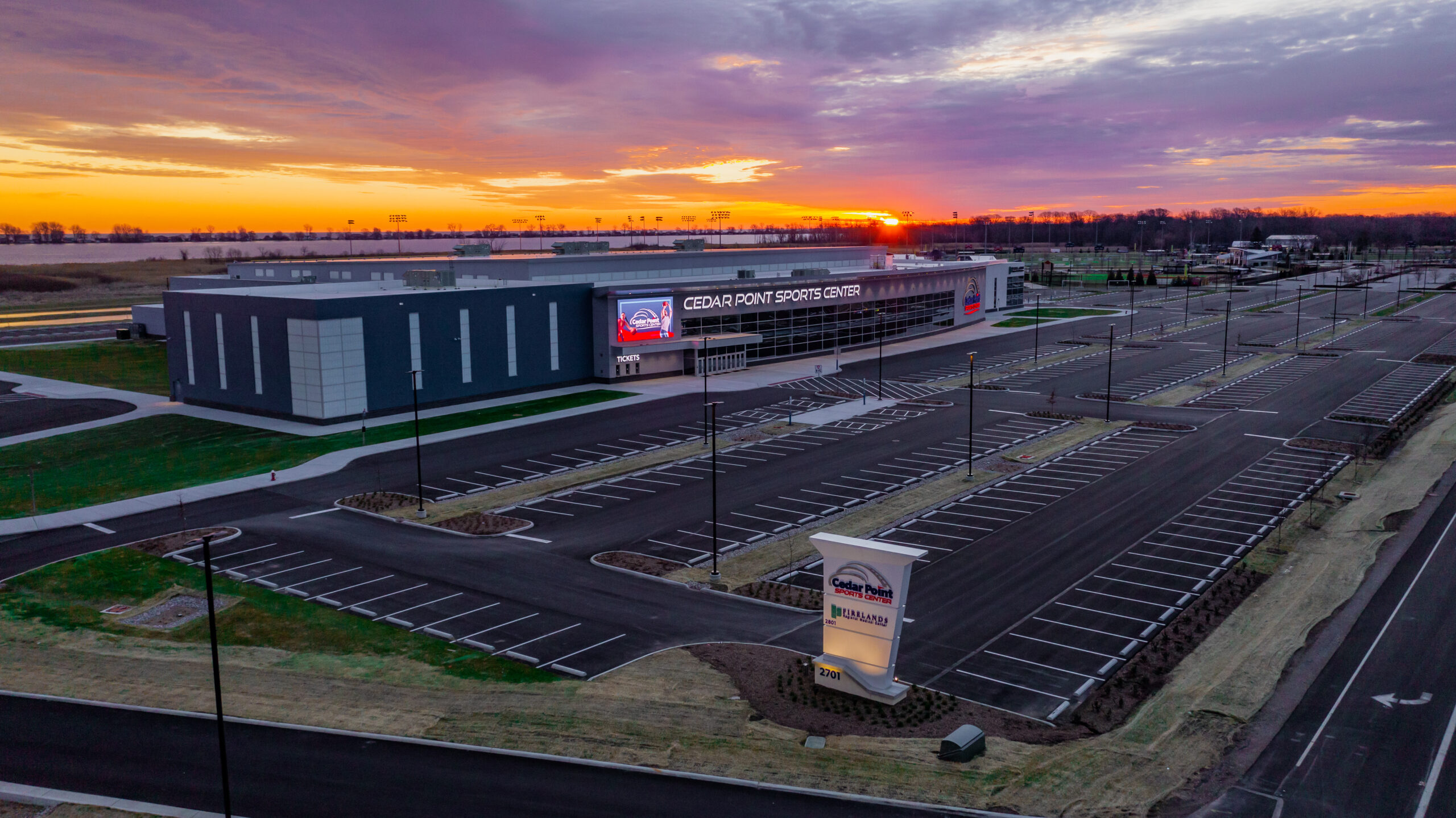
The Sandusky venue is designed for that kind of flexibility. It includes 10 basketball courts, 20 volleyball courts, a championship arena, concessions, team rooms, a walking track, and family entertainment amenities such as climbing and ninja elements. Nearby Cedar Point Amusement Park gives traveling families another attraction.
Experience Design Starts Before the First Match
Strong event concepts are designed with the guest’s perspective in mind. How does a parent know where to go at check-in? What happens between matches, and how will the building feel at 8 a.m. versus 8 p.m.?
For Cosmic Combat, the building itself is the first design challenge. “We have a ton of windows, a ton of natural light,” Mr. Schwerer says. “It’s not like it’s a convention center where you feel like you’re in a basement.” Earlier sunsets in late October help, and the team is still finalizing how to create the desired glow. Any lighting plan also must keep the mats visible to officials and safe for athletes.
Programming Can Extend a Facility’s Value
A municipality should evaluate an event like Cosmic Combat as part of a larger programming strategy. Cosmic Combat filled an open weekend with a new event from a proven partner. The next questions are whether the same space can support clinics and camps alongside tournaments, and whether themed events can build demand on dates that are traditionally harder to book.
Those questions belong in the market analysis completed before a project moves forward. Municipalities need evidence about participation, competing venues, demographics, and travel demand before committing capital.
The same discipline applies to an existing venue. Cedar Point Sports Center’s relationship with Combat Life shows how it works in practice: an event owner delivers one event well, and the venue says yes to its next idea.
The Event Is the Product, and the Community Is the Market
A successful travel event can drive hotel stays, restaurant visits, retail spending, and local transportation. Those outcomes depend on the event’s scale and audience, and you should measure them, not assume them.
Reach varies by event and by season. Combat Life’s July event at Cedar Point Sports Center drew wrestlers from more than 35 states. Mr. Schwerer expects Cosmic Combat to draw a regional field, with some athletes traveling from several states away. “We’re probably not getting kids from Alaska to wrestle in this as we did over the summer,” he says.
Measurement also depends on who holds the data. At Cedar Point Sports Center, event owners often handle registration, so they hold participant data. “If it was year two, I’d probably have a little more insight,” he says. Cities and operators should set data-sharing expectations with event owners up front so they can track visitor origin and hotel nights from year one.
A creative event should never stand alone. Glow wrestling attracts attention. Reliable staffing and a calendar built on real demand determine whether that attention becomes lasting value.
The Cosmic Combat Takeaway
Cosmic Combat shows how a venue can pair a familiar sport with a strong theme and careful operations to create a different kind of event. For municipalities, the sequence is straightforward: test demand before building or expanding, and plan the guest experience before promoting. Then measure the results, including participation, visitor origin, hotel nights, local spending, operating performance, and community access.
SFC helps municipalities develop and manage sports facilities with that in mind. To discuss what your community could support, call 727-474-3845 or fill out the contact form.
Download
Cedar Point Sports Center Case Study