




By: Ally Azzarelli
To the casual observer, a hockey rink or skating arena looks like a seasonal amenity built for a niche audience; the reality is quite different.
Well-managed ice skating and hockey rinks serve a remarkably wide range of community members, from youth learn-to-skate programs and recreational figure skaters to competitive hockey leagues, synchronized skating teams, and high-school athletics. And because quality ice facilities are relatively scarce, the communities that build them often find themselves with more demand than they expected.
Year-Round Ice Demand
The single biggest misconception about ice rinks is that they’re seasonal. Modern indoor ice facilities operate 12 months a year, and in many markets, they run at or near capacity nearly every week.
- Early morning sessions are filled with adult hockey leagues and figure skaters squeezing in practice before work.
- After-school hours are dominated by youth programs and club teams.
- Evenings bring public skate sessions, leagues, and instruction.
- Weekends are tournament time.
The economics follow from that utilization. According to Sports Facilities Companies’ (SFC) detailed analysis of ice rink construction costs, a two-sheet ice facility costs between $37.6 million and $46 million to construct, a significant investment. But communities with strong hockey and skating cultures often find that demand quickly absorbs the investment, particularly when the facility is positioned to serve both recreational and competitive uses simultaneously.
Multiple User Groups
Few public facilities serve as many distinct user groups as a well-programmed ice rink. Youth hockey associations are typically the most visible, but they share ice with adult recreational leagues, figure skating clubs, synchronized skating teams, speed skating programs, collegiate club teams, and learn-to-skate academies.
Special events, holiday skating, corporate outings, and birthday parties add another layer of activation that doesn’t require a league schedule to generate.
That diversity of users is a significant financial advantage. No single user group can sustain an ice facility on its own; the combination of programming streams, each occupying different time slots and generating different revenue models, is what makes the economics work. Professional management that understands how to build and balance relationships with user groups is essential from the earliest days of operation.
Recreation and Competition
The most successful ice facilities serve both ends of the competitive spectrum. On one end, open public skating sessions introduce new players to the ice, build community affinity for the facility, and generate accessible, broad-based revenue.
On the other end, tournament-caliber events, regional hockey competitions, figure skating invitationals, and collegiate showcases bring out-of-town visitors who fill local hotels, eat at local restaurants, and generate the kind of economic impact that justifies public investment in the facility. SFC’s work on the sports tourism model makes clear that facilities capable of hosting regional and national events generate a qualitatively different level of economic return for their communities.
Community Gathering Space
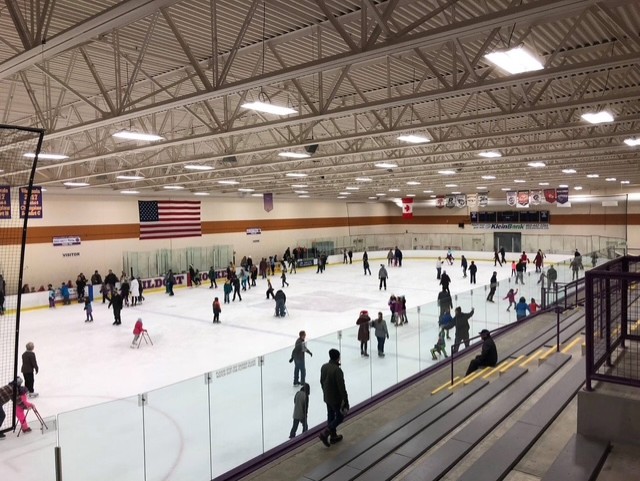
Beyond athletics, ice rinks serve as genuine community gathering spaces. A holiday open skate draws families who’ve never been to a hockey game. A learn-to-skate program connects kids with a sport and a community they wouldn’t otherwise access. The rink becomes a place people associate with celebration, tradition, and shared experience, exactly the kind of civic asset that builds long-term public support for the investment.
SFC manages several ice facilities within its national network and has the expertise to guide communities from concept through construction to successful long-term operations. Learn more about SFC’s ice rink facility services, call us at 727-474-3845, or contact us online to explore what an ice facility could mean for your community.
Download
Montclair State University Ice Arena Case Study