





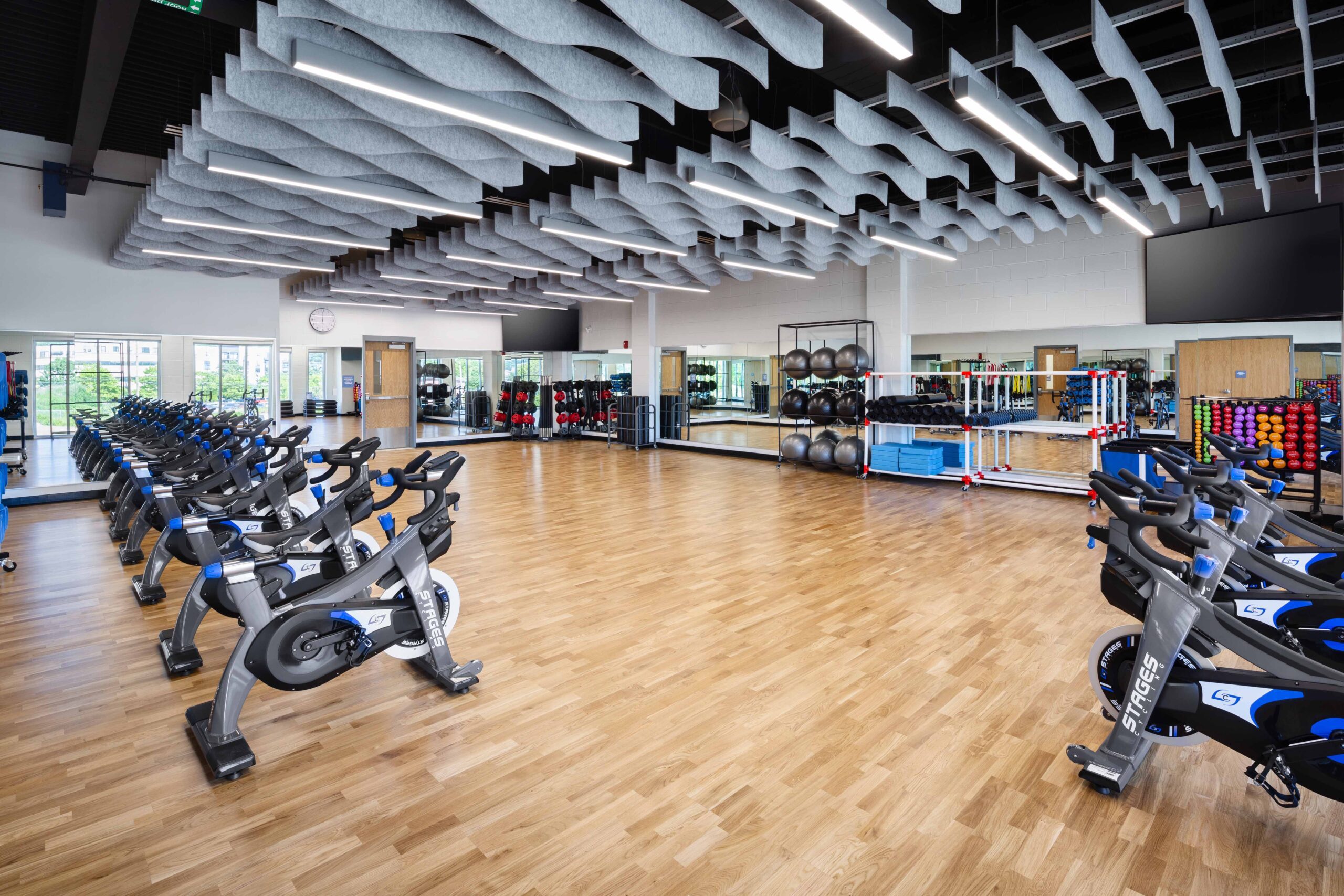
New London Community Recreation Center in New London, Connecticut
By Ally Azzarelli
A recreation center is a public asset, a service business, and a daily promise to residents. It needs effective programs, reliable staff, safe facilities, clear reporting, and a financial plan that supports community goals.
That’s why municipalities are exploring outsourced facility management. A qualified operator can bring specialized experience and familiarity with operating systems. The right fit matters, as well. A partnership that’s not clearly defined can make accountability more challenging.
Outsourcing doesn’t mean giving away the facility. In a fee-for-service arrangement, the municipality keeps ownership and sets the goals. The operator manages agreed-upon daily work and reports on performance. SFC’s recreation center management services describe that approach as a partnership built around community needs.
Before comparing proposals, ask these seven questions.
1. What does success mean for our community?
Start by defining the outcome.
Does your city need stronger resident participation, more consistent staffing, busier calendars, or more reliable financial reporting? A new center may need a launch plan. An existing facility may need a transition plan or performance review.
Define success using public and financial measures, such as participation, resident access, customer experience, earned revenue, operating costs, utilization, or progress toward a subsidy target.
A thoughtful provider will ask questions before making promises. If a proposal leads with revenue projections but devotes little attention to residents, user groups, policies, and budget expectations, use that as a reason to ask more questions.
2. Which services will the operator provide?
“Full-service management” can mean different things from one company to the next. Request a detailed scope of work and identify who owns each responsibility.
When comparing providers, ask how the scope addresses staffing, recruiting, training, payroll, programming, marketing, event booking, maintenance coordination, financial reporting, legal support, and risk management. Recreation centers with pools also need aquatics expertise and safety systems suited to those environments.
Ask what happens on a normal Tuesday. Who answers a resident’s question? Who handles a staff vacancy? Who reviews the schedule? Who escalates a safety concern?
Sports Facilities Companies (SFC) management services offer support across operations, marketing, research and forecasting, legal and risk management, human resources, recruiting, and event booking and sales.
3. How will the city retain control?
Public ownership works best when public accountability is clear. Municipal venues need contracts that make decision rights easy to understand.
Ask which decisions remain with the city, which the operator can make, and which require approval. Clarify the reporting frequency, budget controls, purchasing authority, access to records, and council reporting. Ask how the operator will measure community access alongside financial performance.
A well-structured public-sector facility management agreement gives city leaders a practical view of the business. Look for reporting on revenue, expenses, attendance, programming, staffing, maintenance, and community impact, as well as a clear escalation process.
4. Does the provider understand similar venues?
A company may manage facilities. The important question is whether it understands your facility’s needs.
Ask for examples that match your center’s demands. Has the provider managed a community recreation center, aquatic facility, wellness center, indoor venue, or multi-sport complex? Has it transitioned an existing operation or opened a new facility? Can it provide city or county references?
5. How will residents benefit year-round?
A recreation center should stay connected to the people who use it every week. That commitment should appear in the operating plan.
Ask how the provider will protect local access while pursuing rentals, memberships, camps, clinics, tournaments, and other income-producing activities. Ask who will listen to residents and how their feedback will shape programming.
A strong operating plan should aim to make the facility more useful to the community through stronger classes, clear communication, partnerships, or better use of underused spaces. The operator should work with parks and recreation staff, user groups, clubs, and community partners.
This guide to tackling parks and recreation’s biggest issues connects resident interests with programming and specialized operational support.
6. How will performance improve over time?
A management contract should create a path for improvement.
Ask what the first 90 days will include, which baseline metrics the operator will establish, and who is responsible for each milestone.
For an existing facility, the review may cover physical conditions, historical financials, program plans, marketing, staffing, and reporting systems. SFC’s transition process can include an evaluation, a transition timeline, and a five-year financial outlook. For a new facility, selecting an operating partner 12 to 18 months before the planned grand opening can give the team time to prepare.
Look for clear assumptions, measurable benchmarks, and an honest explanation of what the provider can and cannot change.
7. What will the partnership cost?
Cost matters, but it is only part of the picture. A lower fee may not create value, and a higher fee may not produce the outcomes your community needs.
Ask what the management fee includes and which costs sit outside it. Clarify how staffing, marketing, maintenance, technology, capital needs, and special projects will appear in the budget. Ask whether the city will receive a five-year outlook.
Define performance measures before the agreement begins. A useful scorecard can cover financial performance, participation, utilization, staffing stability, customer experience, safety, maintenance response, and reporting timeliness.
Check out our article on third-party management, which recommends transparent reporting, clear benchmarks, public-sector experience, community access, integrated programming, and a collaborative partnership.
The Right Questions Support a Better Partnership
Outsourcing recreation center management is an important public decision. Compare scopes, references, reporting systems, transition plans, community commitments, and financial assumptions. Ask what the operator will do, how the city will stay informed, and how residents may experience the difference.
The goal is to find a partner with the experience and discipline to support your community’s definition of success.
Sports Facilities Companies (SFC) helps municipalities plan, launch, transition, and optimize sports and recreation facilities. Contact SFC to discuss your facility by calling 727-474-3845 or filling out the form online. A quick discovery call can help you decide whether outsourced facility management aligns with your goals.
Frequently Asked Questions
What is outsourced facility management?
Outsourced facility management, or third-party management, is an agreement in which a municipality hires a specialized operator to manage a facility’s day-to-day work. The city keeps ownership and sets the goals while the operator handles the responsibilities outlined in the contract.
Does outsourcing mean the city loses control?
Not necessarily. A fee-for-service agreement can allow the municipality to retain ownership, set priorities, approve budgets, and receive performance reports, while the operator manages day-to-day execution.
What services do recreation center operators provide?
Services vary by contract and may include staffing, recruiting, training, programming, marketing, event booking, maintenance coordination, financial reporting, legal and risk support, and aquatics operations.
How should municipalities compare providers?
Compare the scope of services, public-sector experience, references, fee structure, reporting practices, transition plan, community access commitments, and performance benchmarks. A useful facility services comparison connects promises to measurable outcomes.

Download
How Third-Party Professional Management Delivers Results