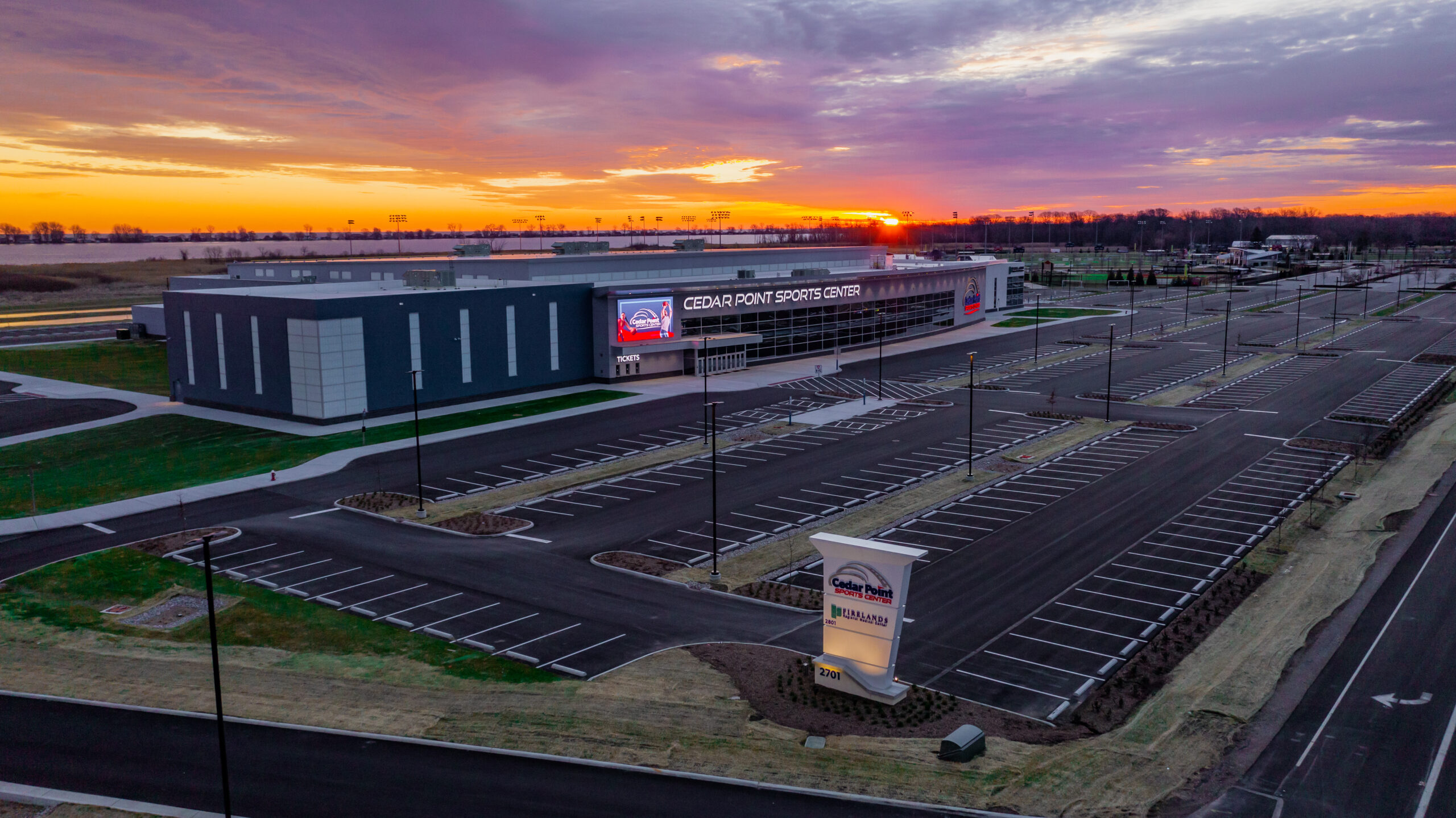





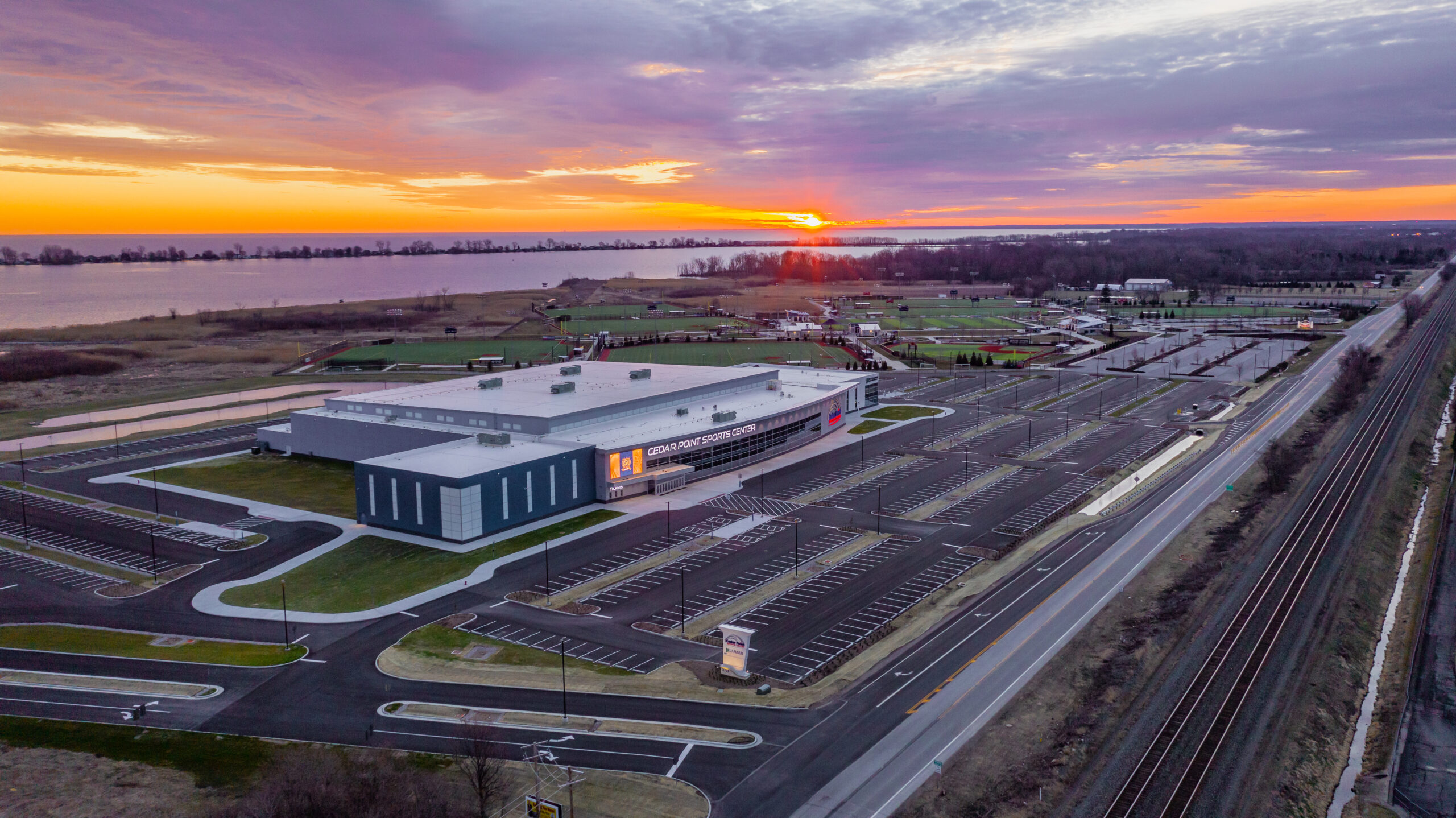
Cedar Point Sports Center in Erie County, Ohio.
By: Ally Azzarelli
When municipal leaders evaluate a sports facility project, the first question is typically about the return. Will this investment generate new tax revenue? Will it bring visitors who spend money locally? Will it catalyze the kind of commercial development that outlasts any single event weekend? For communities that get this right, the answer to all three is a clear yes, and the data to back it up is now substantial.
How Modern Sports Venues Drive Sustained Economic Impact
The economic case for a well-planned sports facility has moved well beyond theoretical. Sports Facilities Companies (SFC)-managed Hoover Met Complex in Alabama generated $101 million in total economic impact in fiscal 2025, up 11% year-over-year, on a $105 million public investment.
The complex attracted 785,000 visitors, generated over 92,000 hotel room nights annually, and posted $1.3 million in operating profit. Surrounding commercial development, 300 apartment units, a new shopping corridor, and a multi-use entertainment district, followed directly from the facility’s visitor traffic.
What’s more, Sand Mountain Park & Amphitheater in Albertville, Alabama, generates more than $20 million annually in economic impact and catalyzed three new hotels, new restaurant brands, and a movie theater in the surrounding area, all within a few years of opening. Communities that build and manage these facilities well don’t just add a sports venue. They redefine what their market can attract.
Turning Vision Into a Fundable, Data-Backed Project
The most important work in sports facility economic development happens before a shovel hits the ground. Market feasibility analysis, financial forecasting, and economic impact projections are the tools that transform a vision into a credible, fundable project, one that can secure bonds, grants, public-private partnerships, and community support.
A rigorous pro forma stress-tests assumptions against realistic demand projections, competitive market conditions, and operational cost structures. Communities that skip this step, or rely on optimistic projections that don’t survive scrutiny, build facilities that underperform and erode public confidence in the investment. Communities that do it right build facilities that outperform early forecasts, as both Hoover and Sand Mountain have done.
Hotel Room Nights, Visitor Spending, and Local Tax Revenue
The most direct economic metric for a sports tourism facility is hotel room nights. When tournament athletes and their families travel to your community for a weekend event, they fill local hotels, eat at local restaurants, buy gas, and visit local attractions. That spending, which wouldn’t occur without the event, is the economic multiplier that justifies public investment.
According to research from the Sports Events and Tourism Association, sports tourism generated $52.2 billion in direct economic impact nationally in 2023, drawing more than 200 million travelers to amateur and collegiate events.
Communities with well-managed, tournament-ready facilities capture a meaningful share of that market, and the hotel tax revenue, sales tax collections, and long-term commercial development that come with it. As SFC’s framework for defining facility success makes clear, economic impact is a design requirement from day one.
Why Cities Choose SFC for Reliable Economic Outcomes
The difference between a sports facility that delivers economic impact and one that becomes a budget liability often comes down to one factor: who operates it.
Professional third-party management, with national programming networks, data-informed staffing models, and relationships with event rights holders, doesn’t just improve day-to-day operations. It shapes better design decisions, attracts higher-value events, and builds the kind of repeat-event relationships (Hoover Met’s 90% repeat rate among event organizers, for example) that sustain economic activity year after year.
SFC has worked with thousands of communities across the country, from feasibility and funding through development and long-term management. If your community is ready to explore what a sports facility could deliver economically, learn more about SFC’s economic development services. Call us at 727-474-3845 or fill out our contact form to get started.
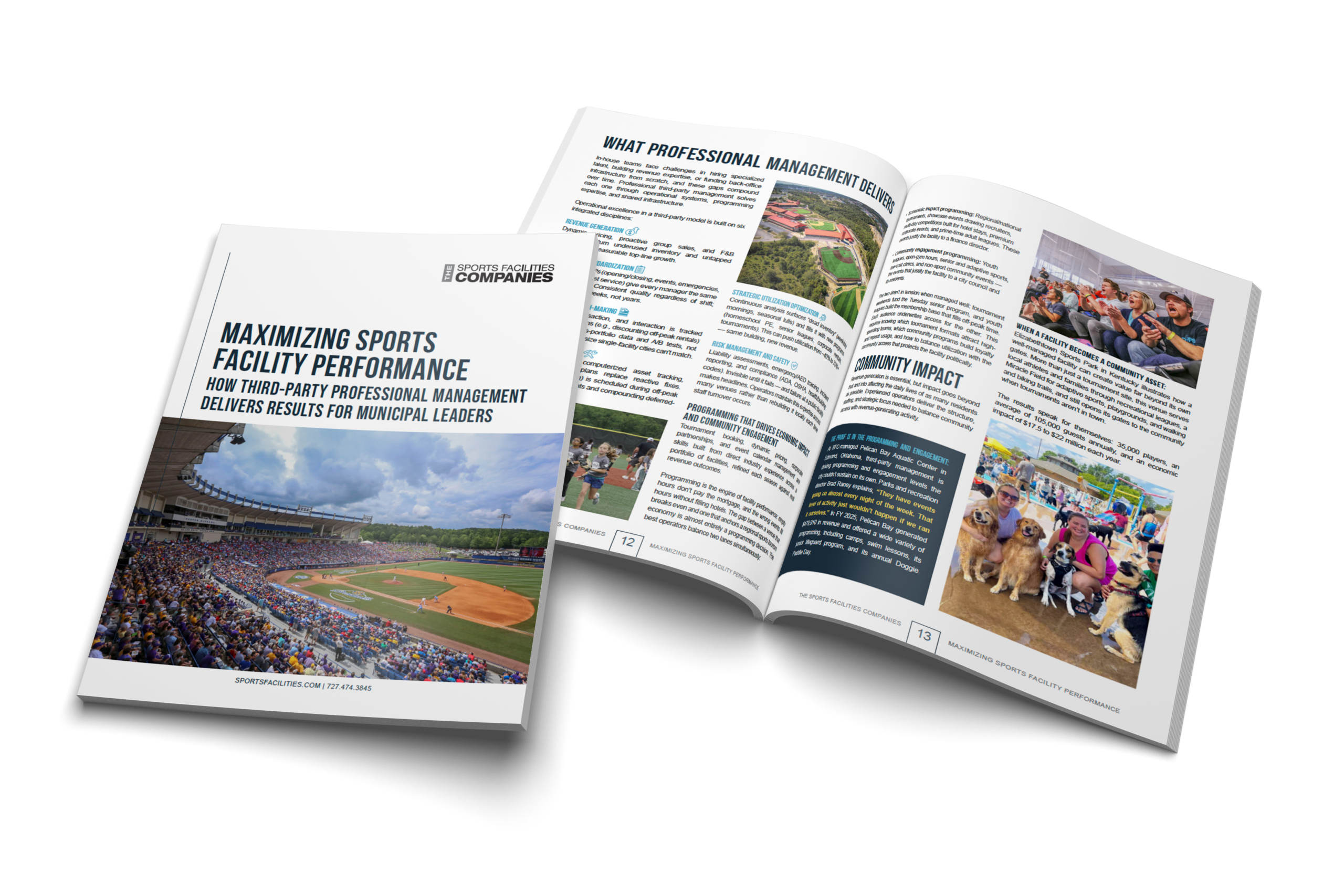
Download
How Third-Party Professional Management Delivers Results